
Kitchen recycling bins: under-sink, pull-out and in-drawer
6 min read
Kitchen recycling bins are part of the interior fittings and are best planned at the design stage. The position of the sink, the width and depth of the cabinet, the type of opening and the number of bins needed all determine which recycling system is most suitable.
There are now specific solutions for under-sink cabinets, high-capacity pull-out systems, bins integrated into drawers and mechanisms for cabinets with hinged doors. The aim is to make the most of the available space, make waste separation easier and keep the bins completely hidden inside the furniture.
At ROBEYAN we treat this equipment as one more part of the project, just as we define the layout, the storage or the appliances of each kitchen.
Why plan recycling from the kitchen design stage
Setting aside space for waste management from the outset means the furniture can be adapted to the real needs of each home. It is not just a matter of deciding how many bins we want, but of checking what capacity the unit can hold and how it will be used day to day.
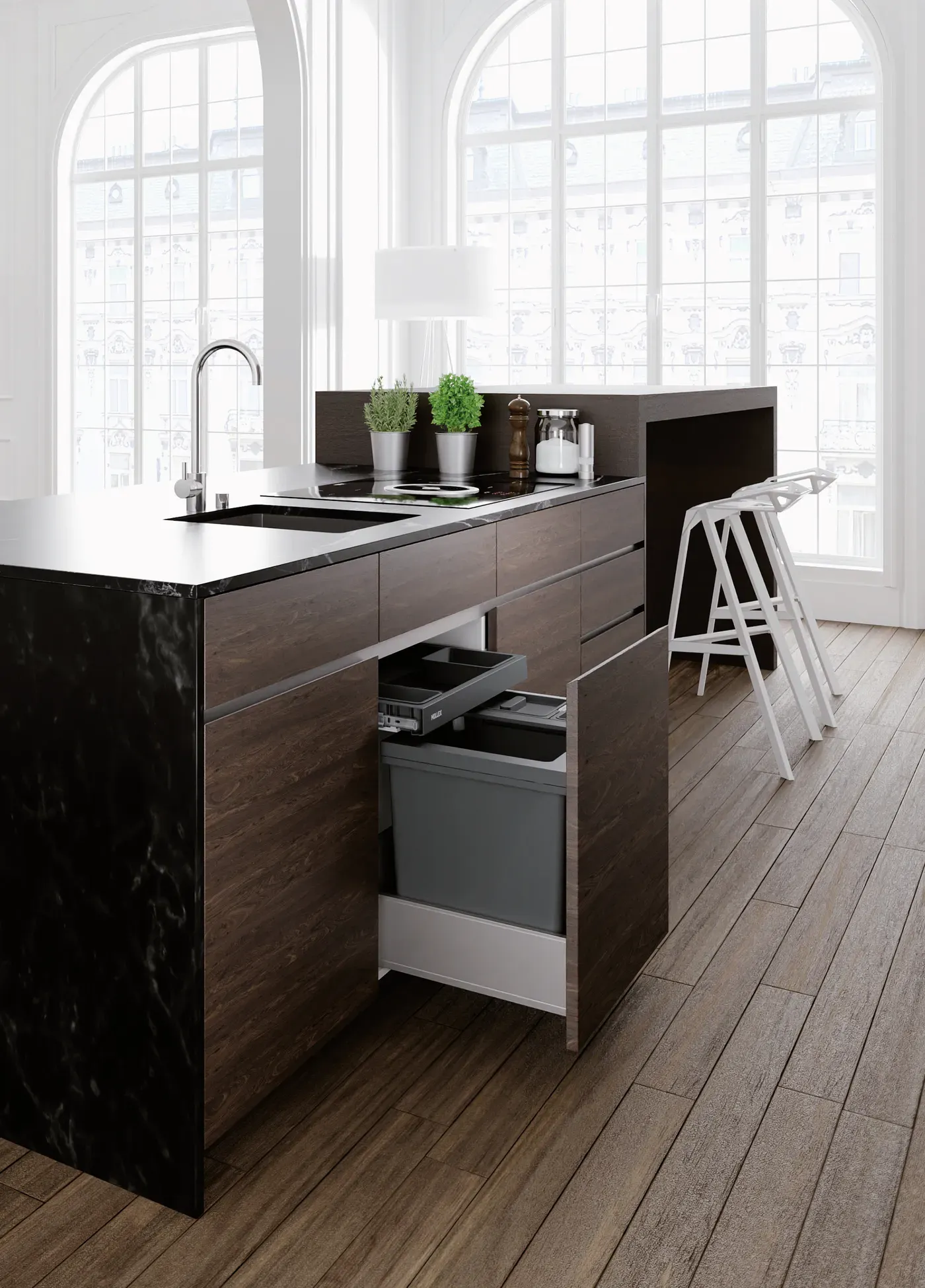
The area next to the sink is usually one of the most practical locations, as it concentrates much of the preparation and cleaning work. However, it is also a cabinet constrained by the trap, the water connections and other technical elements, so it needs systems designed specifically to make the most of its interior volume.
In addition, Spain’s Law 7/2022 on waste and contaminated soils requires the separate collection of paper, metals, plastic, glass and bio-waste, among other fractions. For household bio-waste, the deadlines for local authorities to implement it ended in 2023.
How many recycling bins do you need?
There is no layout that suits every home. Capacity should match the number of people, consumption habits, how often the waste is taken out and the collection system available in each municipality.
| Household | Suggested configuration | Unit width to consider |
|---|---|---|
| 1-2 people | 2-3 main bins | 400-450 mm |
| 2-3 people, kitchen used daily | 3 bins | 450-600 mm |
| Family or intensive use | 3-4 bins and more capacity | 600 mm or a dedicated unit |
This is a guideline, not a fixed size. In some homes it may be better to give more capacity to packaging or organic waste and handle paper or glass with an auxiliary bin. That is why, before choosing the system, it is worth looking at how waste is actually generated in that home.
Under-sink recycling bins
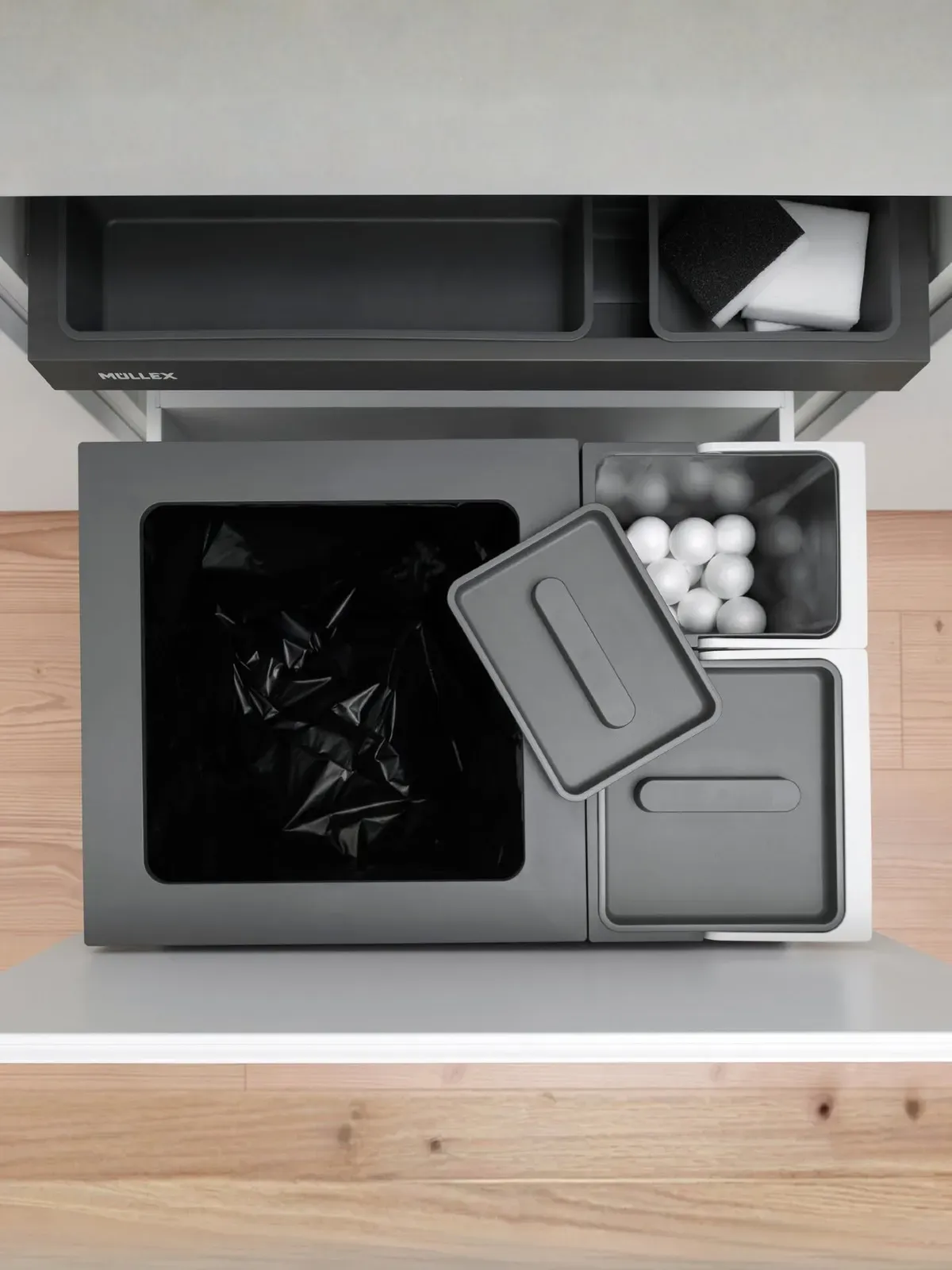
Under-sink recycling bins make the most of a particularly complex area of the furniture. To install them correctly, the position of the trap and the available interior dimensions must be checked.
D’Aqua offers a specific range for this application made up of X-Line Müllex, Boxx Müllex, Synchro Plus and Concept 560 H298, as well as a space-saving trap designed to make this type of installation easier.
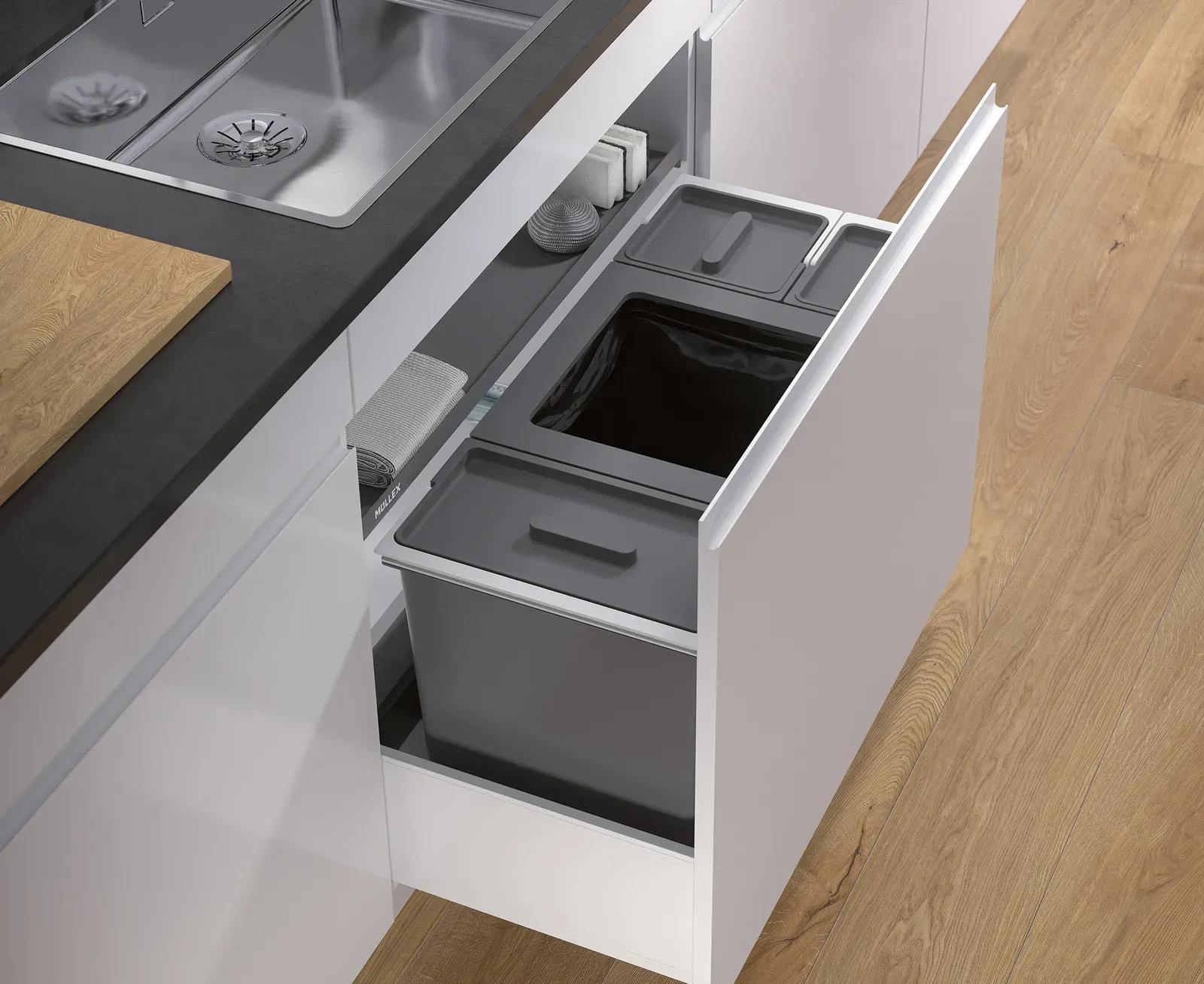
X-Line Müllex
Available in different configurations for cabinets from 400 to 900 mm, combining bins of different capacities depending on the width of the unit. Its system includes an adjustable extender that fits the pull-out drawer and can be complemented with a perimeter lid and various accessories.
In addition, the X divider splits certain 35 or 40-litre bins into two spaces for 17-litre bags, increasing the sorting options without changing the whole system.
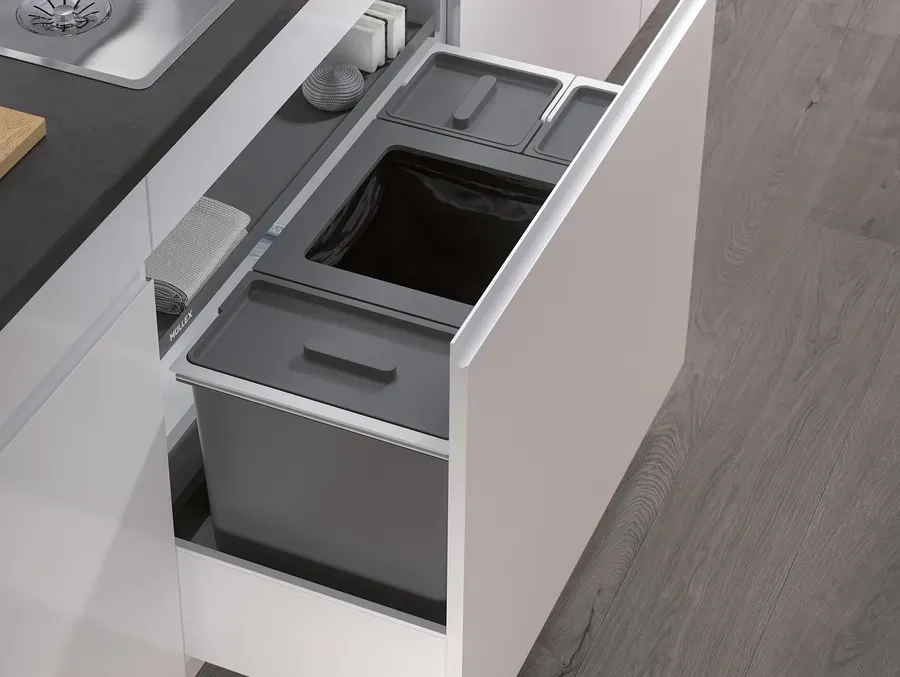
Synchro Plus
Another solution designed specifically for this area, with configurations for 300, 450 and 600 mm cabinets. It features full-extension runners, soft-close and an interior perimeter lid that covers the bins when the system is closed.
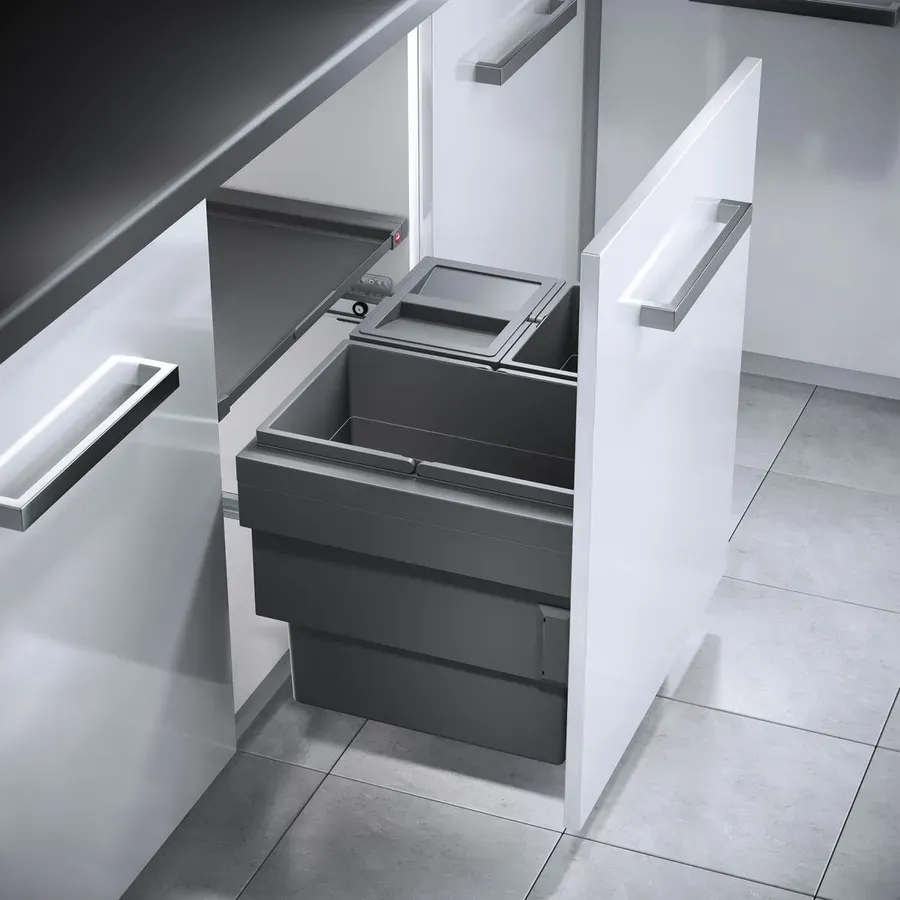
Concept 560 H298
It takes a different approach to integration. It is available for 300 to 900 mm cabinets and has no runners of its own, as it is designed to use the same drawer system as the rest of the kitchen furniture. This keeps the kitchen more consistent, both technically and visually.
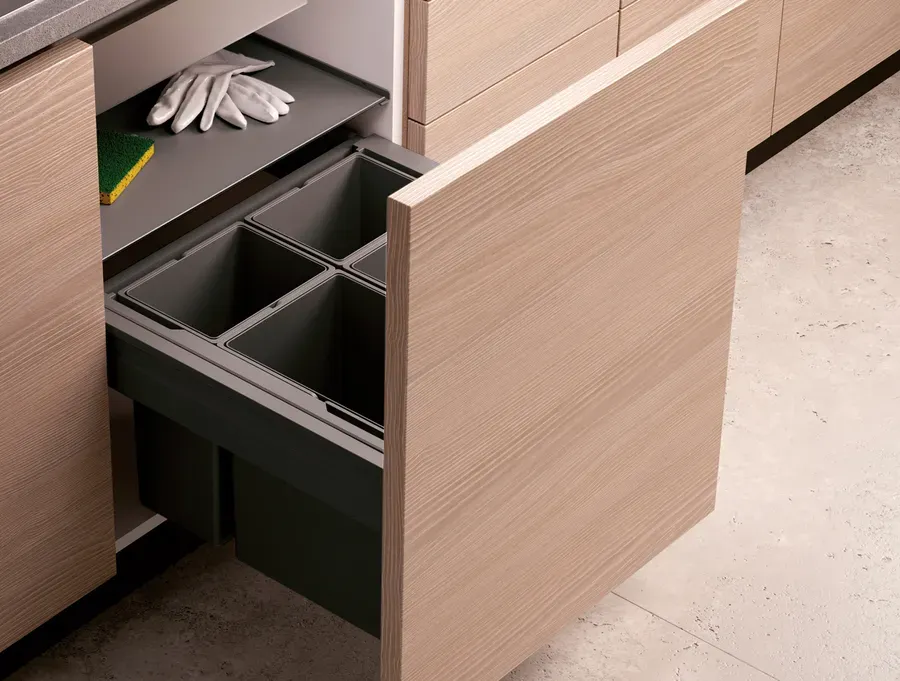
High-capacity pull-out recycling bins
When the project allows a unit to be reserved exclusively for waste, high-capacity systems offer more volume and different sorting options.
In this category, D’Aqua includes Babylon Evo, Avento Plus and Concept 560 H463. Some models can also incorporate the MYZYME Atomizing System, which mists an enzymatic liquid developed to act on the odours of wet and organic waste.
-
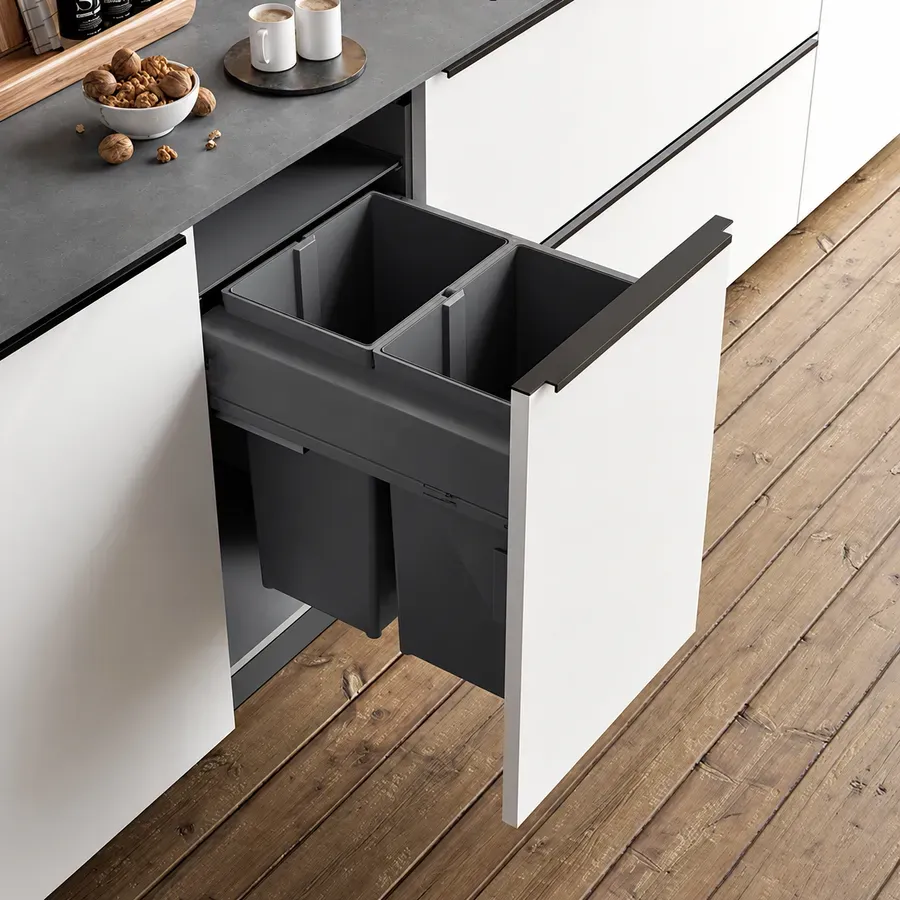
Babylon Evo
Configurations with 29 and 40-litre bins, full extension, soft-close and a perimeter lid.
-
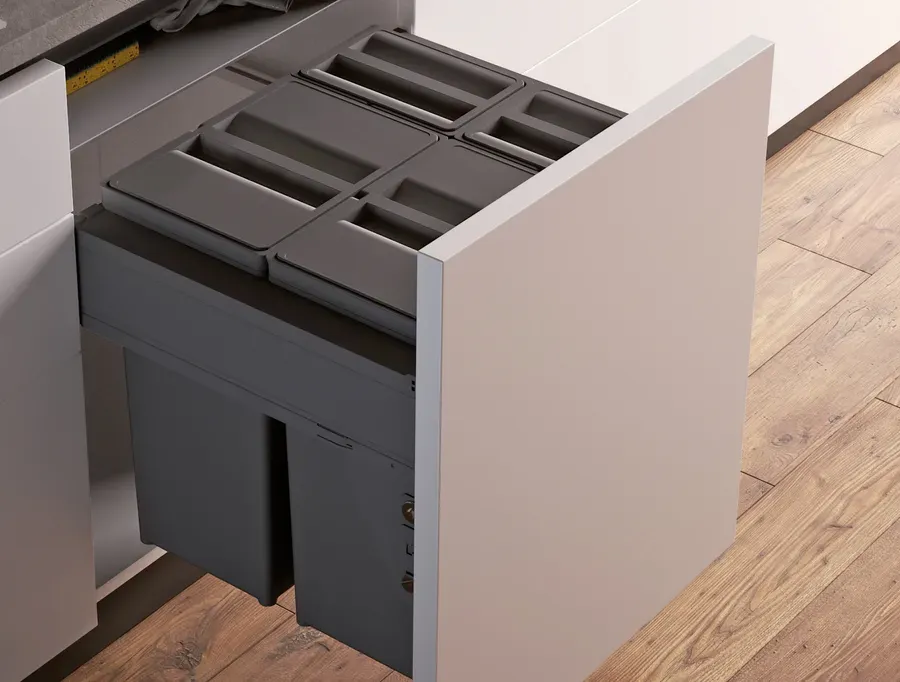
Avento Plus
High-capacity bins with individual lids.
-
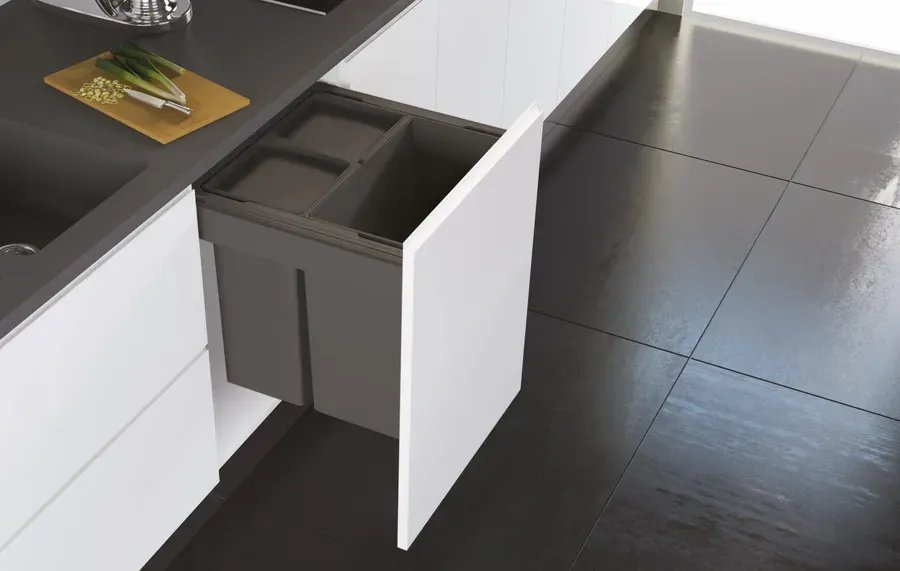
Concept 560 H463
Integrates with the runners of the furniture itself.
-
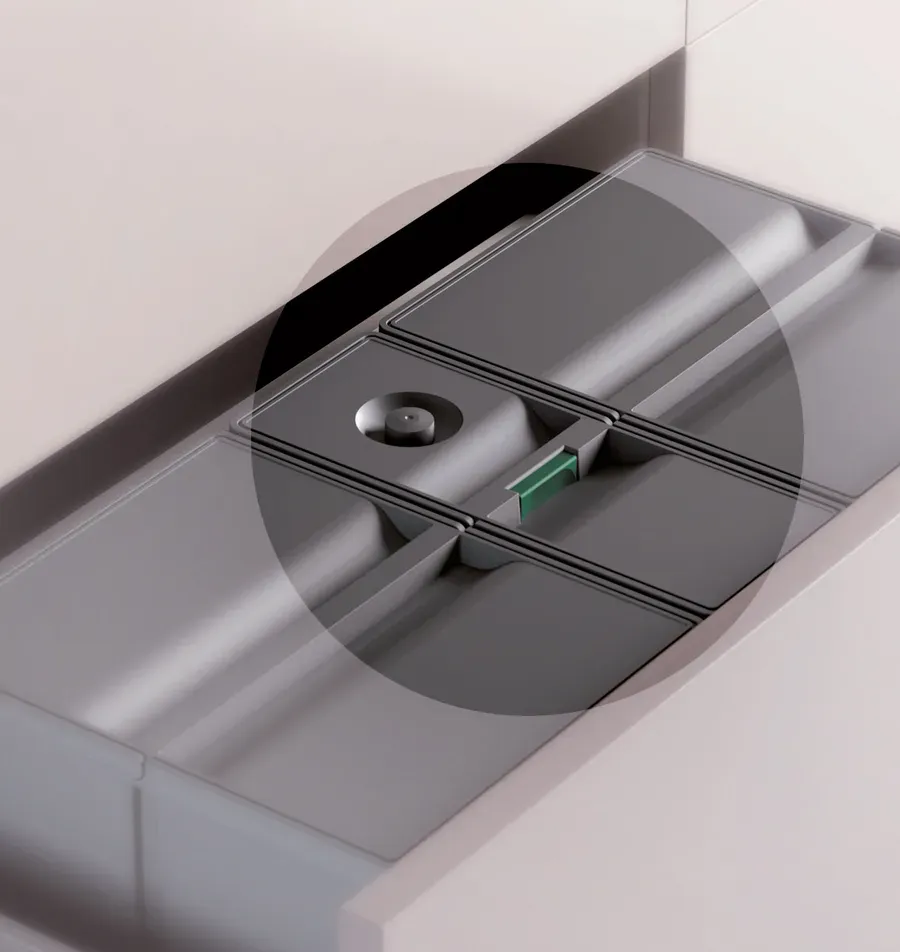
MYZYME Atomizing System
Enzymatic misting for the odours of wet and organic waste.
Recycling bins integrated into drawers
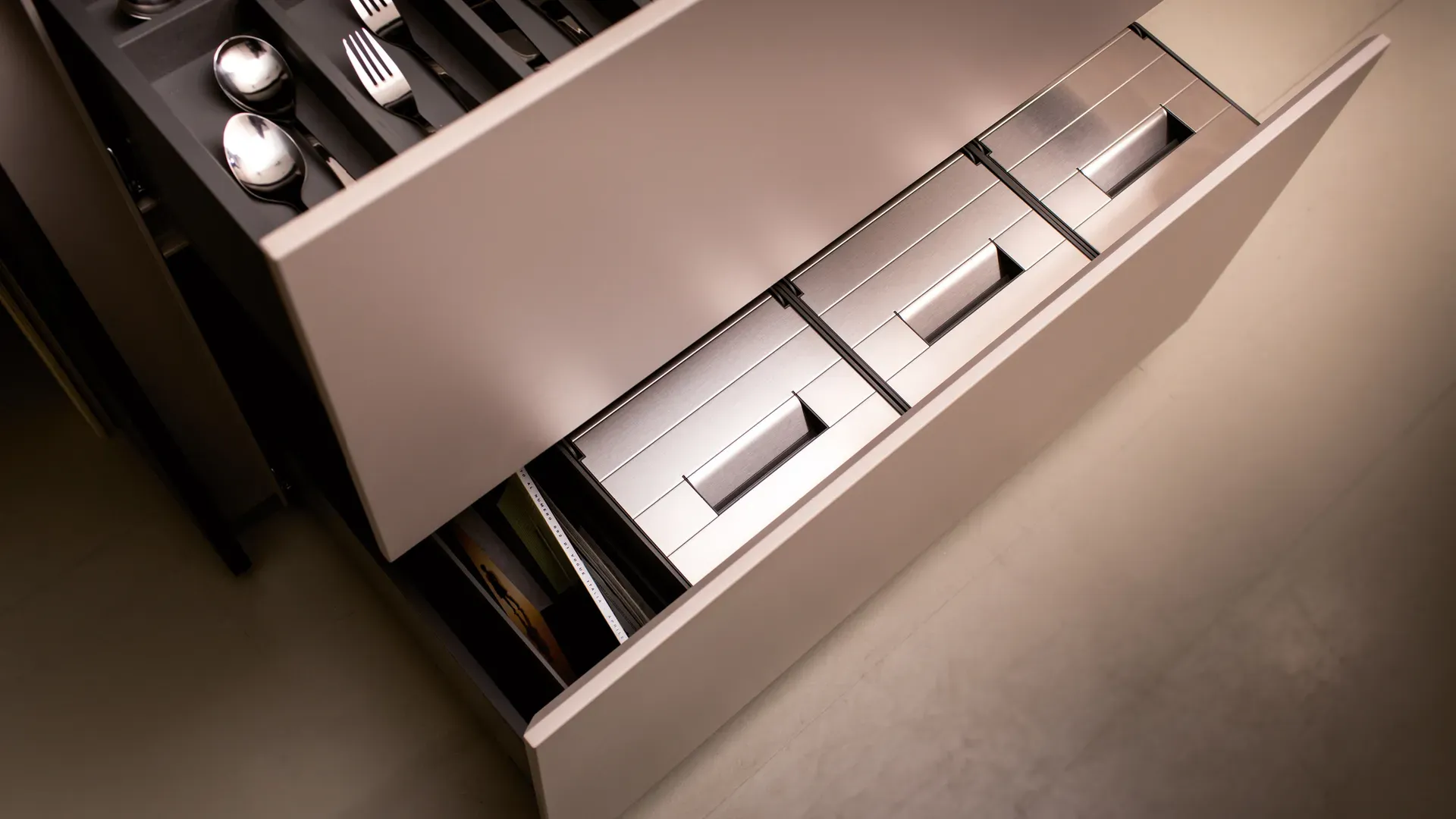
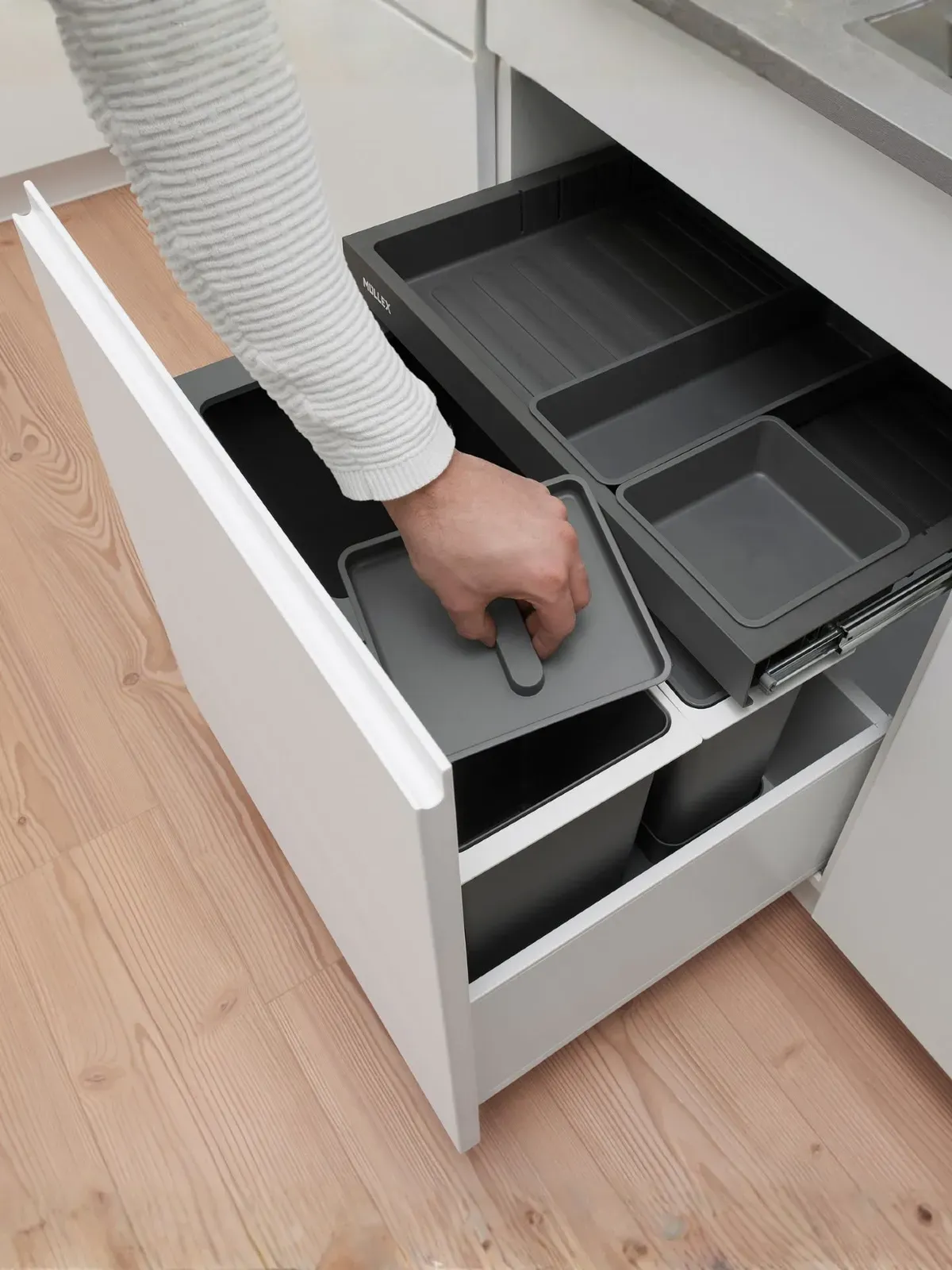
Systems integrated directly into a drawer are especially interesting when you want to keep the exterior of the furniture continuous. With the front closed, the waste area blends completely into the kitchen.
D’Aqua includes Maxi XL and Cubos Premiere in this range. Cubos Premiere can also take specific accessories for storing paper for recycling.
-
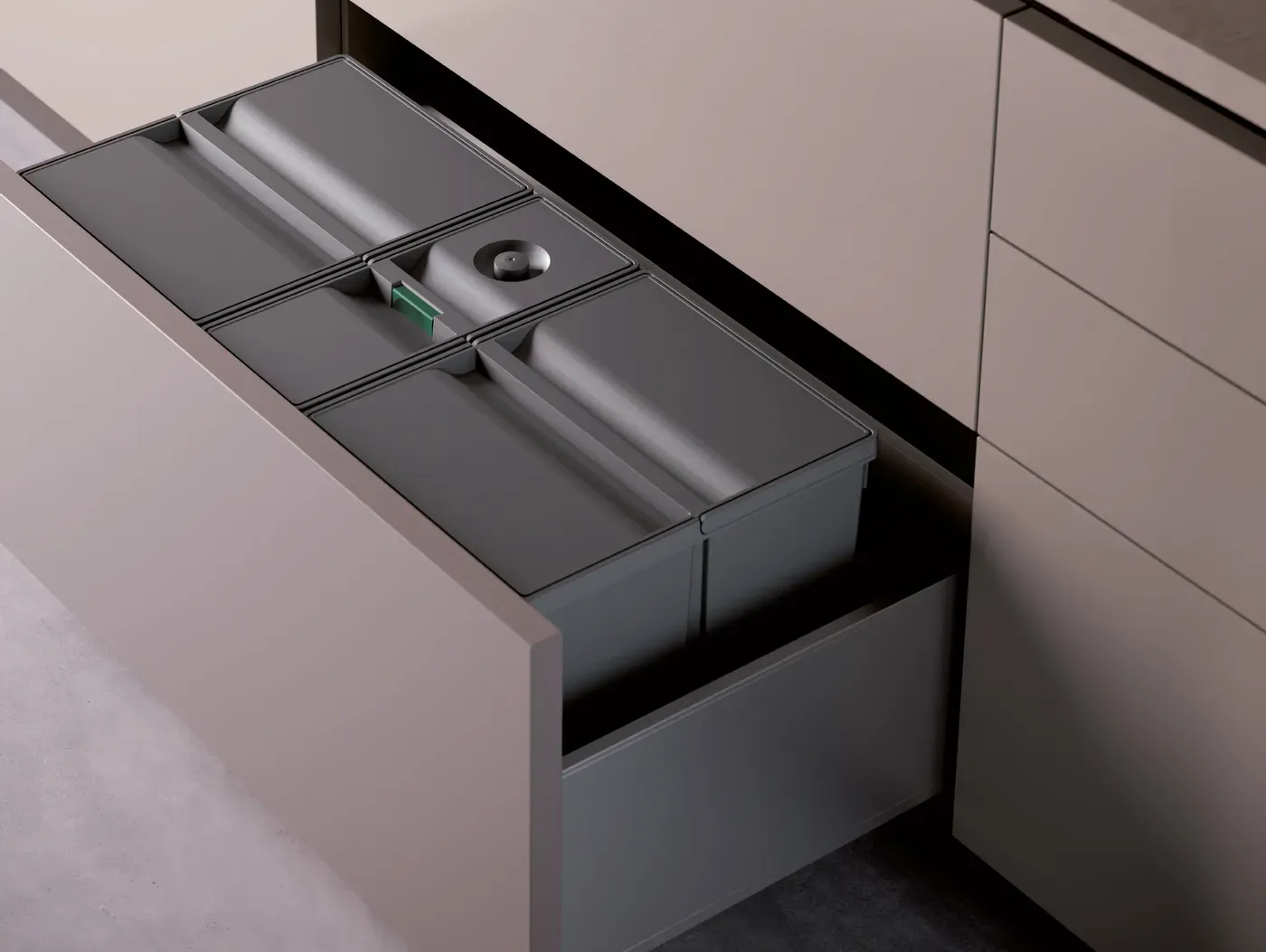
Maxi XL
Different combinations for cabinets from 450 to 1,200 mm, with different heights and capacities.
-
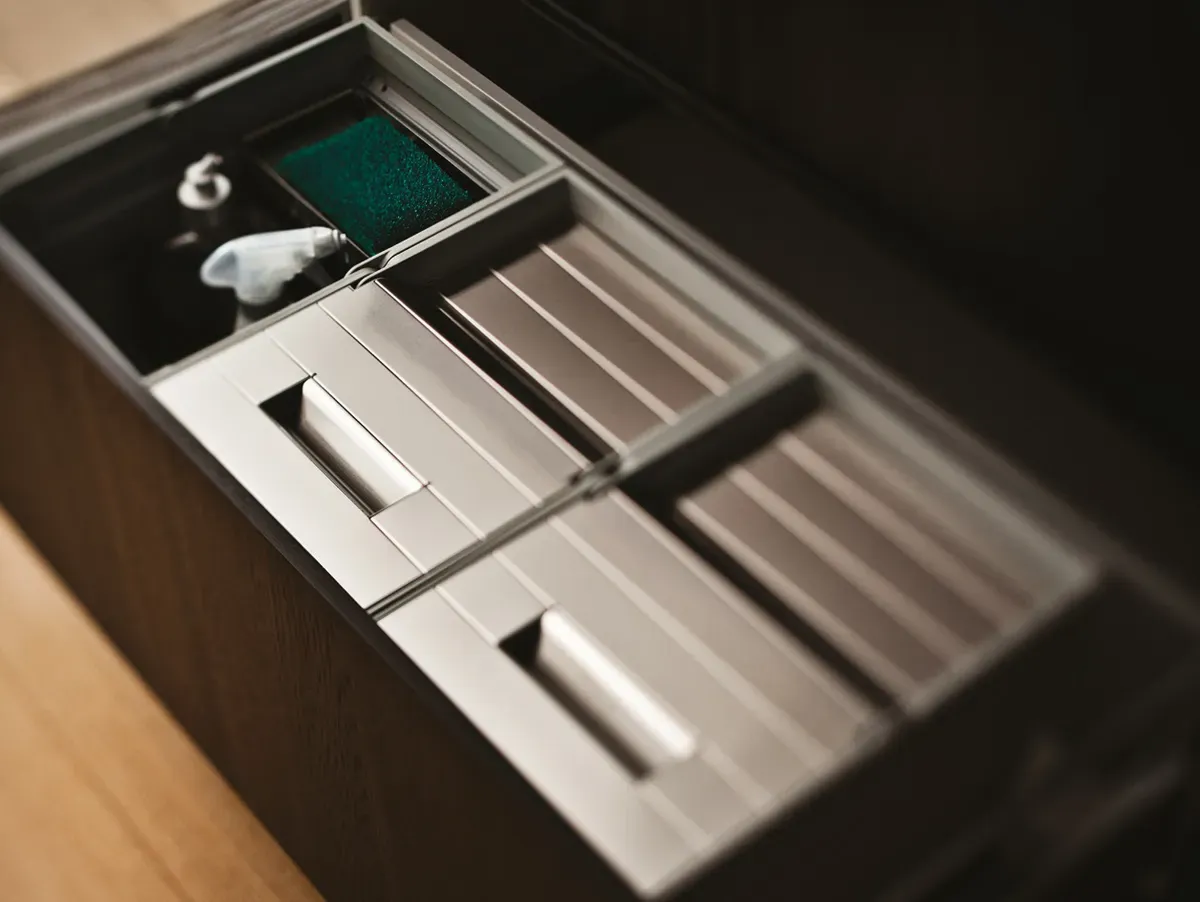
Cubos Premiere
For 600, 900 and 1,200 mm drawers, with two, three or four bins depending on width and height.
Recycling bins for cabinets with hinged doors
Not every kitchen has drawers in the waste area. For cabinets with hinged doors there are specific systems that keep the installation tidy and make good use of the interior space.
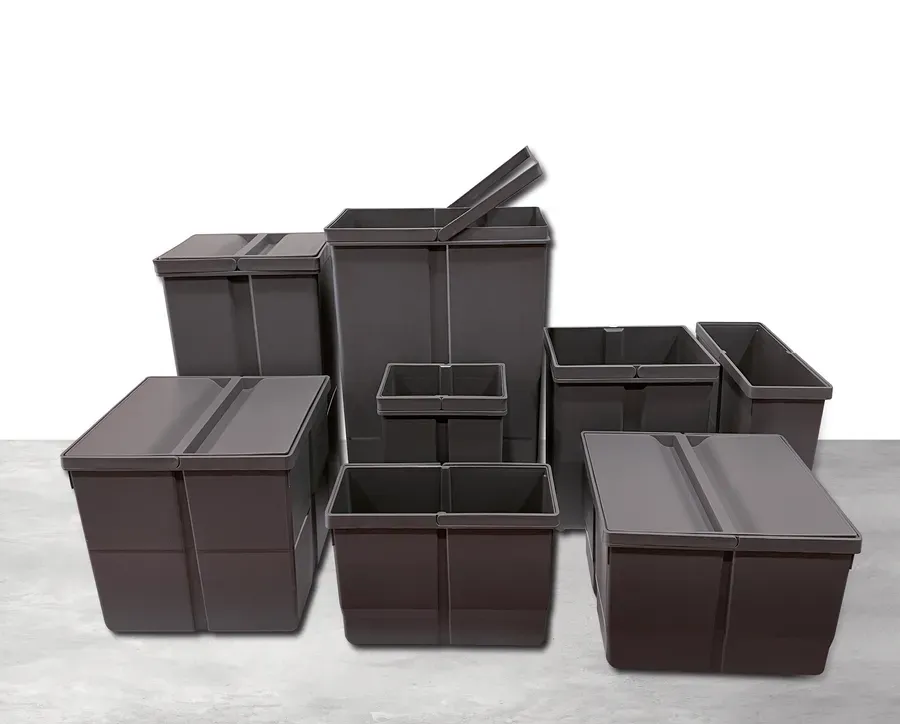
D’Aqua groups solutions such as Euro Müllex, Dline Müllex, Spazio Block, Spazio Evo, Minimal Inox, Prisma Inox and Individual Modular in this category. They can also be a good option for adding or renewing the recycling system in an existing kitchen, provided the interior dimensions of the cabinet are compatible.
-
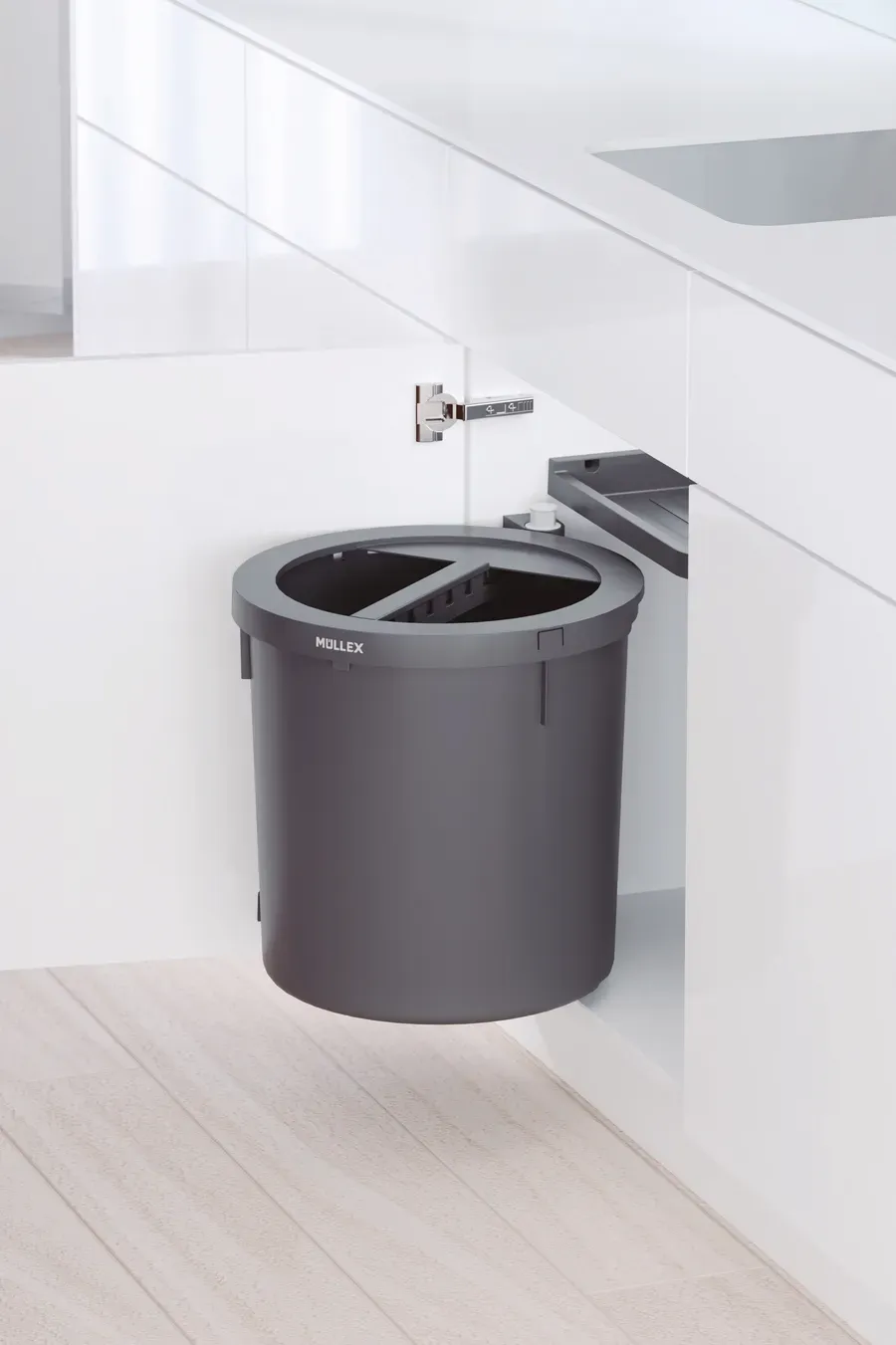
Dline Müllex
Designed specifically for cabinets with hinged doors, with different capacities and interior division options.
-
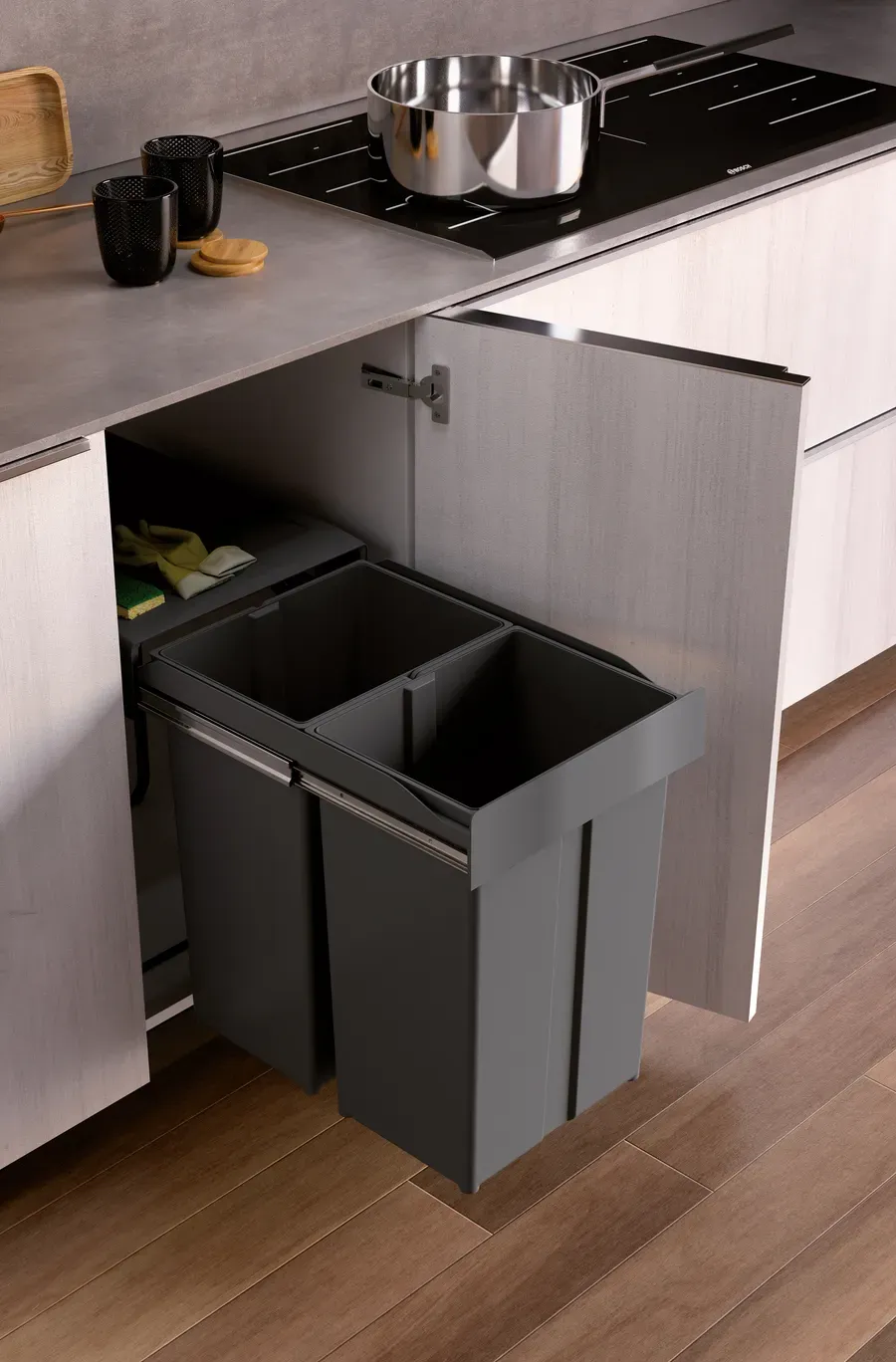
Spazio Block
Full-extension runners and opening via a fixing to the door.
-
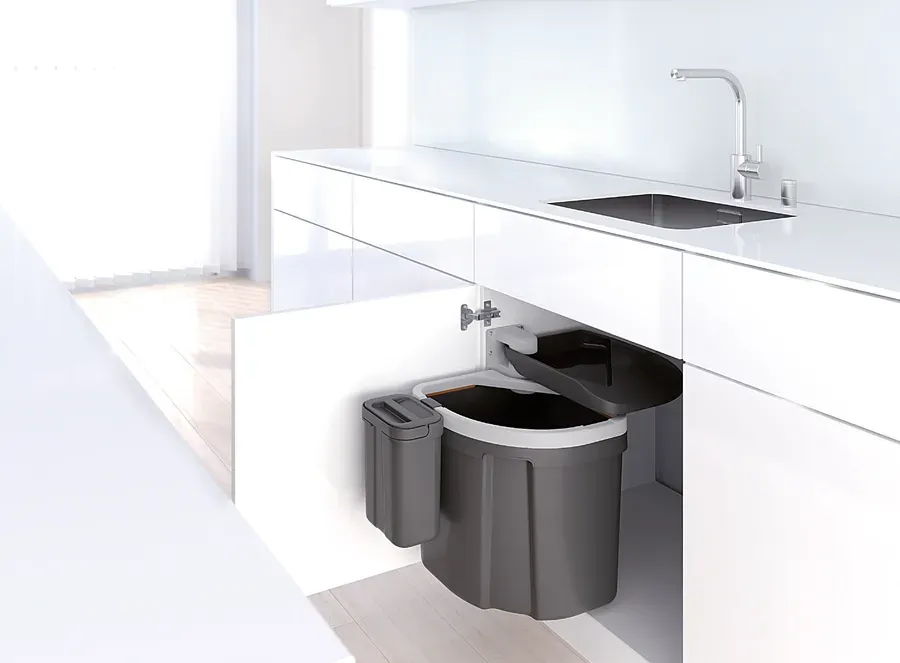
Euro Müllex
-
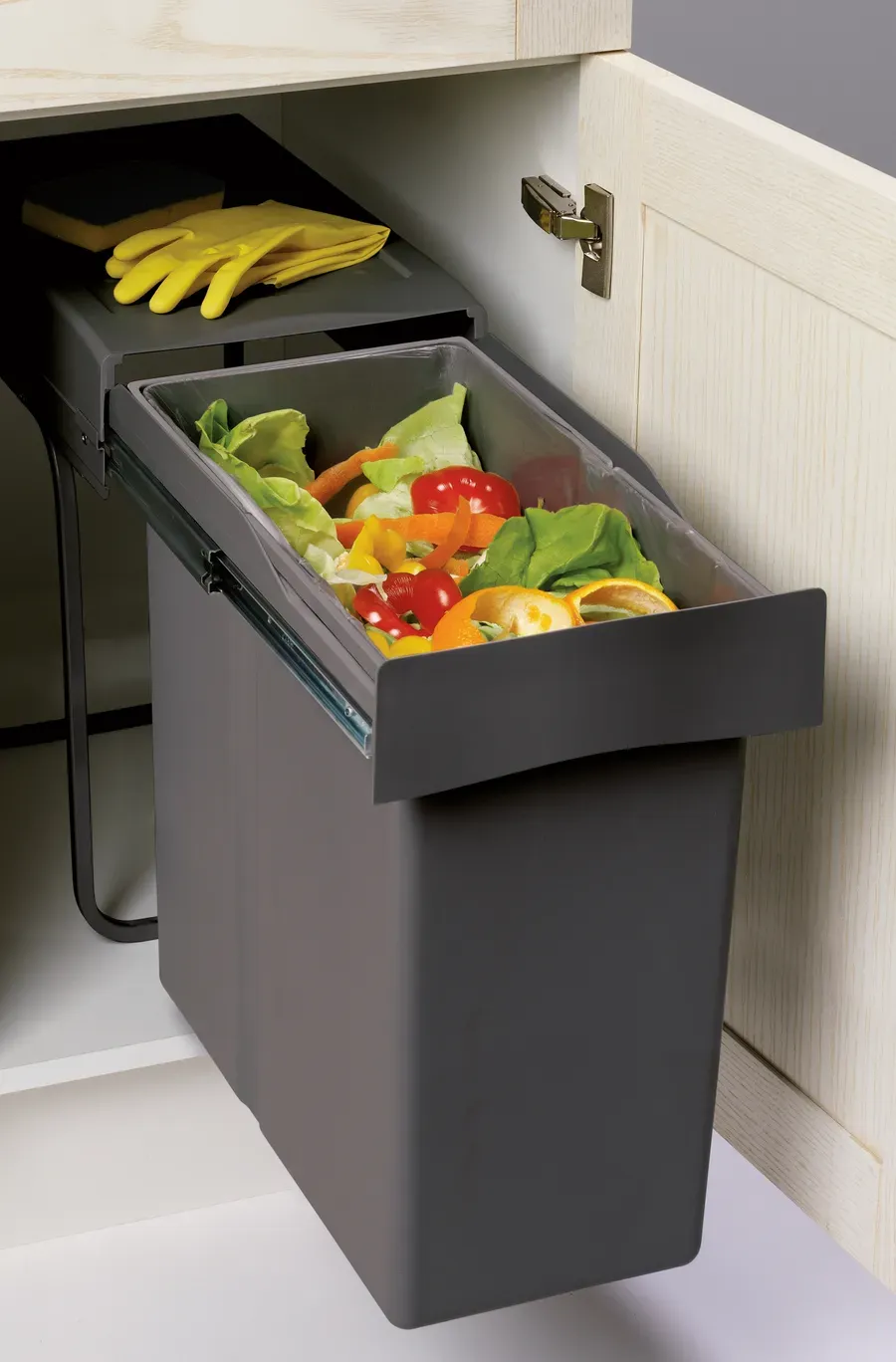
Spazio Evo
-
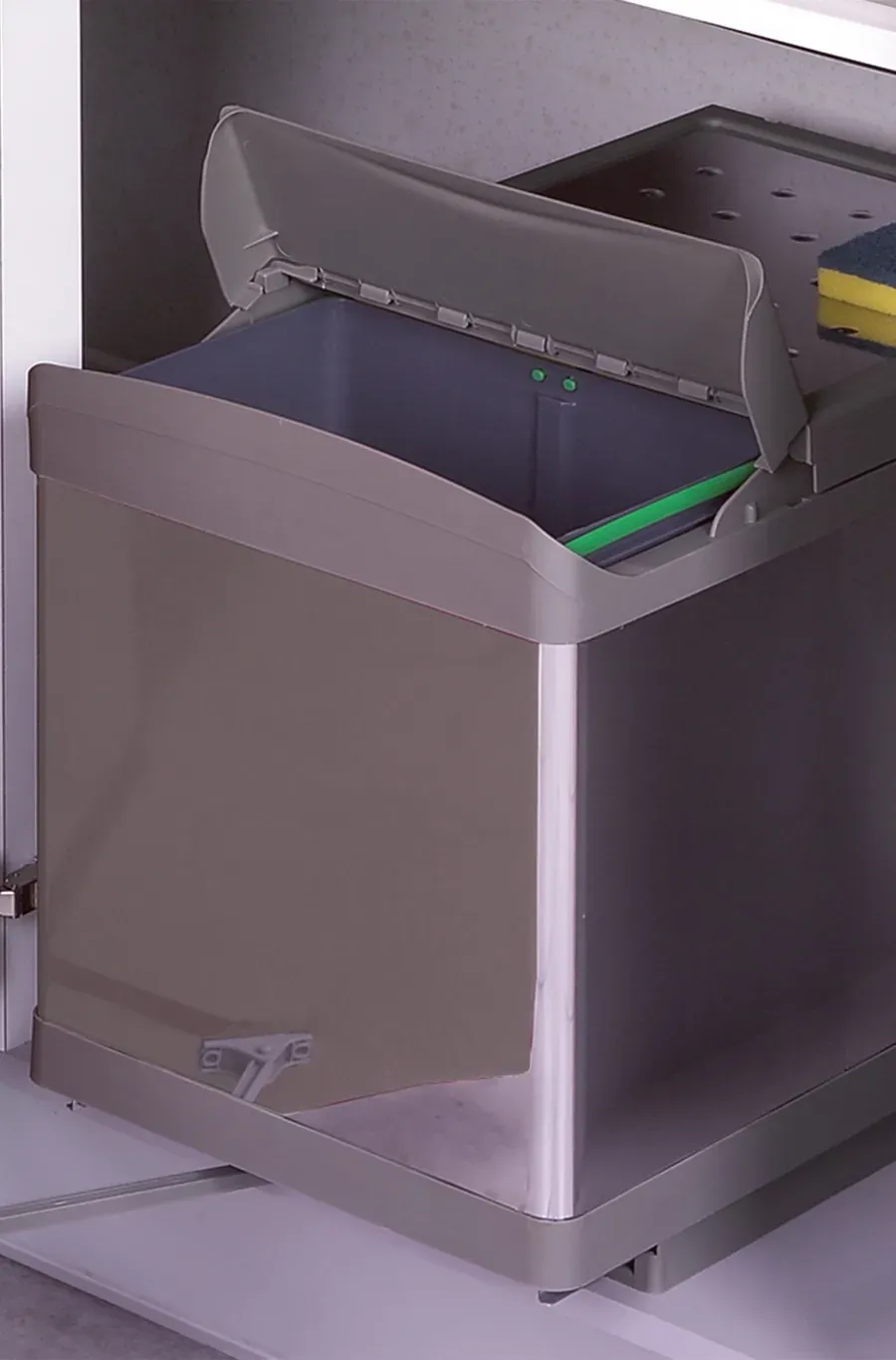
Minimal Inox
-
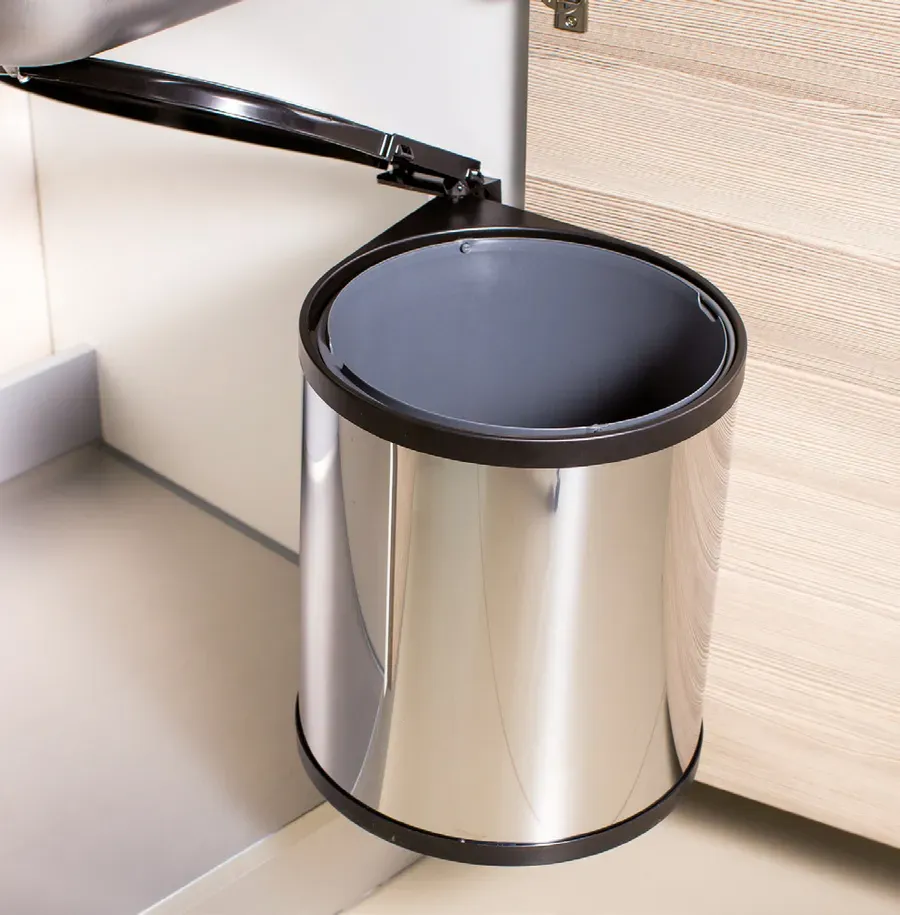
Prisma Inox
-
Individual Modular
What to consider before choosing recycling bins
Before choosing a recycling system, it is worth checking four things:
- The number and capacity of the bins.
- The interior dimensions of the cabinet.
- The type of opening.
- Whether there are installations such as the trap.
The choice should be made together with the rest of the interior fittings. A system with many bins is not necessarily better if each one is too small, just as a high-capacity bin may not be the right option if it means giving up a unit needed for storage.
It is the same logic we apply when planning the sizes and layout of a kitchen: every element has to respond to the available space and to how the room will actually be used.
Recycling bins integrated into bespoke kitchens in Cantabria
A good waste management system should make sorting easy and, at the same time, be properly integrated into the furniture.
At ROBEYAN we design bespoke kitchens in Cantabria, taking into account both the outside look and everything that happens inside the units. We work with solutions from specialist brands such as D’Aqua to define the most suitable system for each layout and each user’s needs.
From our showroom in Torrelavega we develop bespoke projects in which furniture, worktops, appliances and interior fittings are designed as a whole.
If you are thinking of renovating your kitchen, book an appointment with our team and we will work out with you the most suitable layout and interior fittings for your project.
Frequently asked questions
Can recycling bins be installed under the sink?
Yes. There are solutions designed specifically for this location and adapted to different cabinet widths. The position of the trap and the available interior space need to be checked first.
Is one large bin or several smaller bins better?
It depends on the type and volume of waste each home generates. In most projects it is more practical to combine different capacities than to split the space into identical bins.
Can the bins be integrated into a kitchen drawer?
Yes. There are systems designed for drawers that use the same front as the rest of the furniture and fit several recycling bins inside.
Can a recycling system be installed in an existing kitchen?
In many cases, yes. Hinged-door systems and some pull-out solutions can be adapted to existing cabinets, provided the dimensions and hardware are compatible.
How can I reduce the odours of organic waste?
It is important to empty this fraction often and keep the bins clean. Some systems include individual or perimeter lids, and certain D’Aqua products accept specific odour-control solutions.